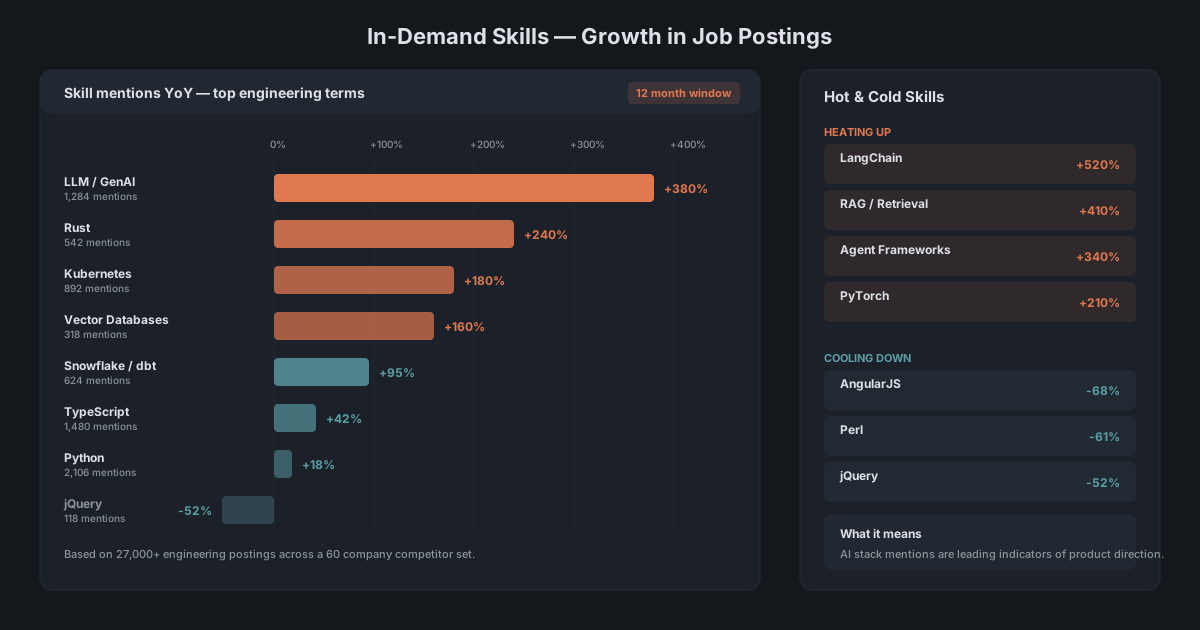
Engineering Hiring Is the Earliest Strategic Signal
Of all the hiring data you can track at a competitor, engineering hiring tells you the most about strategy, timing, and investment scale. Marketing hires reveal what competitors plan to message. Sales hires reveal which markets they're targeting. Engineering hires reveal what they're actually building, when they'll ship it, and how committed they are.
Engineering hiring also leads every other visible signal. Product launches lag engineering hiring by 6-18 months. Earnings call commentary lags by quarters. Press releases lag by weeks. The job postings are operational truth in real time.
Here's how to read engineering hiring data as strategic intelligence.
What Engineering Hiring Reveals
Product Investment Areas
When a competitor concentrates engineering hiring in a specific product area, they're investing in that area. Three new senior backend engineers for the data platform team, a staff engineer for inference infrastructure, and a tech lead for the API platform all appearing in the same quarter signals a major investment in API and platform capabilities. The product roadmap is being built in front of you in the careers page.
Scale and Performance Investments
Hiring for SRE, infrastructure engineering, performance engineering, and database engineering reveals scale ambitions. A company hiring 5 SREs and 3 platform engineers in a quarter is preparing for traffic and customer growth that doesn't exist yet. Tracking these hires identifies competitors who expect to grow before the growth shows up in financials.
Technical Direction
Required technologies in postings reveal technical direction. A company hiring Rust engineers for systems work is committing to Rust. A company hiring Go engineers for backend services is committing to Go. A company hiring TypeScript engineers for frontend is committing to TypeScript and the React ecosystem. Major language and framework choices show up in postings before any blog post announces them.
Geographic Strategy
Where engineering roles are located matters. Companies opening engineering offices in new geographies are committing to those geographies for talent and operations. Companies concentrating hiring in fewer geographies are consolidating. Tracking the geographic distribution of engineering postings reveals geographic strategy that often precedes office announcements by months.
Seniority Mix
Hiring lots of senior engineers (Staff, Principal, Distinguished) signals investment in deep technical work and complex systems. Hiring lots of junior engineers signals scale-driven growth where headcount matters more than depth. The mix tells you whether the team is in build mode or scale mode.
Reading Engineering Hiring as Competitive Intelligence
Early Detection of New Product Areas
The earliest signal that a competitor is building a new product is the first job posting that requires skills relevant to that product. A traditional CRM company hiring a senior ML engineer with vector database experience is building AI features. A B2B SaaS company hiring mobile developers when they previously had no mobile presence is building mobile.
Catching these signals 6-18 months before launch gives competitive teams time to prepare positioning, sales playbooks, and counter-launch messaging. Catching them after launch gives you nothing.
Investment Sizing
The volume of engineering hiring in a product area tells you how big the bet is. One new engineer might be a small experiment. Five engineers in a quarter is a real investment. Twenty engineers in a quarter is a strategic priority. Tracking the magnitude of hiring lets you weight your competitive responses accordingly.
Timing Predictions
Engineering hiring patterns predict launch timelines. A new product area typically requires:
- Foundational hires (2-3 senior engineers, 1 tech lead): months 0-3
- Build-out hires (5-15 engineers): months 3-9
- Polish and scale hires (designers, QA, infrastructure): months 6-12
- Launch (visible product release): months 9-18 from foundation hires
Tracking the phase of hiring tells you roughly when launch is coming. Foundation hires today suggest launch in a year. Polish and scale hires today suggest launch in 3-6 months.
Hiring Slowdowns as Strategic Signals
Engineering hiring slowdowns at a previously growing competitor are a strong signal of strategic shift. Possible meanings: hiring freeze, runway concern, leadership change, strategic refocus, or pre-layoff signaling. The lag between visible hiring slowdown and the explanatory event is typically 30-90 days. Watching for these slowdowns at target accounts gives early warning that financial signals miss.
Tracking Workflows for Engineering Intelligence
Manual Tracking
For a small competitor set (3-5 companies), manual tracking is feasible. Visit competitor career pages weekly. Note new engineering postings. Track changes over time in a spreadsheet. This works for the highest-priority intelligence but doesn't scale beyond a handful of companies.
Automated Posting Aggregation
For larger competitor sets, automated posting aggregation is necessary. Tools (including Fieldwork) collect job postings across competitor and target account lists, parse skills and seniority, and surface trends. The automation lets you track 50-200 companies systematically rather than 5 manually.
LinkedIn Profile Tracking
Combine job posting data with LinkedIn profile change tracking. New hires show up in LinkedIn after they start, providing confirmation that postings led to actual hires. Departures show up in LinkedIn similarly. Combining both data sources gives a fuller picture than either alone.
Internal Reporting
Engineering intelligence is most valuable when it reaches the people who can use it: product leadership, executive team, sales leadership for affected accounts. Build internal reporting that surfaces the most important changes weekly or monthly, with context about what they mean.
Common Mistakes With Engineering Hiring Intelligence
Mistake 1: Watching Only Headcount
Total engineering headcount is interesting but not actionable. The composition of hiring (which teams, which technologies, which seniority levels) matters more than the total count. Track composition, not just totals.
Mistake 2: Ignoring Departures
Hiring tells you what a competitor is adding. Departures tell you what they're losing. Both matter. A company hiring 10 engineers per quarter and losing 12 isn't growing. Watching only the hiring side hides the churn.
Mistake 3: Static Snapshots
One snapshot of engineering hiring is interesting. Trend data over time is actionable. The right view is "engineering hiring at this competitor over the last 6 quarters" not "engineering hiring at this competitor today."
Mistake 4: Not Sharing Intelligence
Engineering hiring intelligence collected by one team in one company silo isn't useful. Share the data with product, executive, and sales teams who can act on it. The value of intelligence is the actions it enables.
Building Engineering Intelligence Into Strategic Reviews
Companies that operationalize engineering hiring intelligence integrate it into quarterly strategic reviews:
- Competitor engineering growth rates and hiring direction
- New product area signals (where competitors are investing)
- Technical direction shifts (language, framework, architecture)
- Geographic strategy changes
- Investment sizing relative to your own engineering investment
- Predicted launch timelines for tracked product areas
- Hiring slowdowns or accelerations as strategic signals
This level of intelligence used to require expensive analyst reports and hours of manual research. Job posting data and LinkedIn profile tracking now make it possible to generate the same insights in minutes from automated sources.
Fieldwork's competitive intelligence reports include engineering hiring tracking across your competitor set with team-level breakdowns, technology trends, and quarterly comparison views. See pricing to start tracking engineering investment at your competitors.
Frequently Asked Questions
What can I learn from competitor engineering hiring?
Engineering hiring reveals which product areas a competitor is investing in, what their technical direction is, what scale they're building for, and how aggressive their growth plans are. Specific signals include team-level hiring patterns (which managers are growing), required tech stack (what they're building with), seniority levels (early-stage builds vs mature scale), and geographic concentration (which offices are getting investment).
How fast does engineering hiring data update?
Job postings update in real time. New engineering roles appear within days of being approved internally. Compared to product launches (which lag by months) or earnings calls (which lag by quarters), engineering hiring is the earliest visible signal of competitor investment.
What's the best signal for predicting competitor product launches?
Hiring of senior product engineers, designers, and product managers in a specific area, combined with infrastructure hiring (databases, APIs, scaling) for that area. When you see all three categories hiring for the same product area at the same competitor, a launch is typically 6-12 months out. The combination is more reliable than any single signal.
How do I distinguish growth hiring from replacement hiring?
Growth hiring shows up as new team-level roles, multiple openings for the same role at the same level, and net additions to org charts visible through LinkedIn. Replacement hiring is more sporadic and often follows visible departures. Tracking total team size over time separates growth from churn.
Can engineering hiring predict layoffs or strategic shifts?
Yes. A sudden stop in engineering hiring at a previously growing company usually precedes a strategic shift, hiring freeze, or layoff. The lag between hiring stop and announcement is typically 30-90 days. Watching for hiring slowdowns at target accounts gives an early warning that traditional financial signals miss.