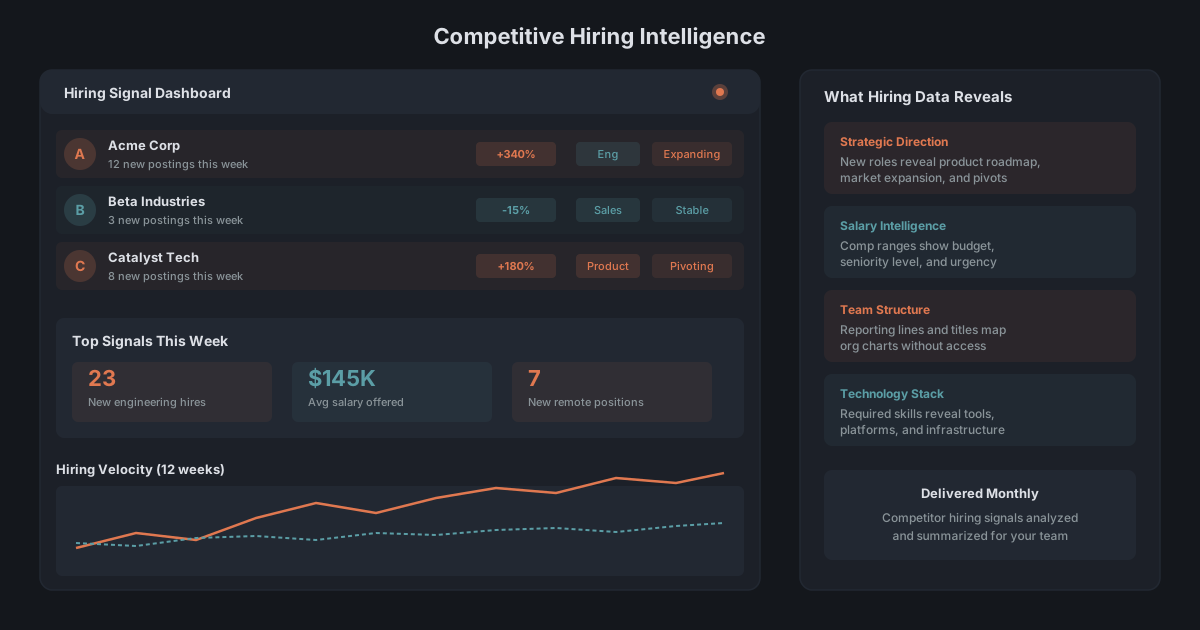
The Sales Signal Hiding in Plain Sight
Your target account just published a detailed description of their priorities, budget allocation, technology choices, and team gaps. They posted it on their careers page. And your sales team probably did not notice.
Job postings are the highest-quality public buying signal available. Unlike intent data from content downloads (which measures curiosity, not commitment), a job posting represents approved headcount budget, manager conviction, and organizational priority. When a company posts a role, they have already decided to invest. The question is whether they build the capability in-house or buy it.
For account-based selling, this is gold. Here is how to mine it.
Three Types of Hiring Signals That Drive Sales
Signal Type 1: Capability Building
When a prospect posts a role in a function your product serves, they are building the capability you sell. This is a direct buying signal.
If you sell a data analytics platform and your target account posts for three data engineers, they are investing in analytics capability. They will either build it (those hires) or buy it (your platform) or both. Either way, there is budget, and there is priority.
Map your product's value proposition to the roles that either use your product, replace your product, or complement your product. Then monitor your target accounts for those postings. Every new posting is a trigger for outreach.
Signal Type 2: Technology Stack Reveals
Job postings list required and preferred technologies. This tells you exactly what a prospect's current stack looks like and where they are headed.
If a posting requires experience with a competitor's product, you know the account is currently using that competitor. That is displacement intelligence. If they list your product category without naming a specific vendor, they are either evaluating or have not yet selected. That is greenfield opportunity.
If the posting lists a technology that integrates with your product, that is a partnership or expansion opportunity. The tech requirements in a job posting are a technical architecture diagram that the prospect published voluntarily.
Signal Type 3: Organizational Growth
Rapid hiring signals growth. Growth means budget. Budget means purchasing power.
A company that doubled its engineering team in the last two quarters is scaling. Scaling companies buy tools, platforms, and services to support that growth. They cannot afford to build everything internally when they are hiring 50 people at once. The infrastructure needs outpace the team's capacity.
Track total open roles at your target accounts. A 30%+ increase quarter over quarter should put that account at the top of your outbound list. They are spending money, and some of it should be yours.
Building Job Posting Data Into Your ABS Workflow
Step 1: Define Your Signal Map
Create a document that maps your product to relevant job titles and technologies. For each, define the relevance:
- Direct signal: The role directly uses or replaces your product. (Example: "Security Operations Analyst" for a SIEM vendor.)
- Indirect signal: The role supports a function that benefits from your product. (Example: "VP of Engineering" for a developer tools vendor.)
- Technology signal: The posting mentions a technology in your ecosystem. (Example: "Snowflake experience required" for a data integration vendor.)
Step 2: Monitor Target Accounts
For your top 50-100 target accounts, set up monitoring using the approach from our competitive hiring alert guide. Weekly scans of careers pages and LinkedIn Jobs, with alerts for new postings matching your signal map.
Prioritize accounts with multiple signals. One matching posting is interesting. Three matching postings in the same quarter is a campaign in motion. That account is actively investing in your product's domain.
Step 3: Craft Signal-Based Outreach
Reference the job posting directly. This is not creepy. It is prepared. The posting is public information, and referencing it demonstrates that you have done your homework.
Template framework (customize to your voice):
Subject line: Re: your [Role Title] search
Opening: "I noticed you are hiring a [Role Title]. Companies investing in [capability] at your stage typically face [specific challenge your product solves]."
Value prop: "We help teams like yours [specific outcome] without waiting 6 months for the new hire to ramp. [Customer proof point]."
Ask: "Worth a 15-minute conversation to see if there is a fit?"
This approach outperforms generic outreach because it is timely (the posting just went up), relevant (you are addressing their stated need), and informed (you clearly understand their situation).
Using Competitor Hiring Data in Competitive Deals
When you are in a competitive deal, the competitor's job postings give you ammunition.
Staffing Gaps as Competitive Leverage
If a competitor has had a key role open for 90+ days, their team is understaffed. That affects support quality, product velocity, and customer attention. You can (tactfully) reference this in competitive situations: "We have a fully staffed [team/function] dedicated to accounts like yours."
Strategic Direction as Positioning
If a competitor is hiring heavily for a new product line, their existing products may receive less investment. Job postings reveal where a company is putting its resources. If those resources are moving away from the product that competes with you, that is a story worth telling in a sales conversation.
Compensation as Talent Quality Signal
If your competitor pays significantly below market for engineering roles (visible in pay-transparent states), the talent quality may reflect that. You are not going to say this explicitly in a sales meeting. But you can position your own team's expertise and stability as differentiators, backed by the knowledge that you invest more in talent.
Scaling Job Posting Intelligence Across Your Sales Org
For a single AE tracking 20 accounts, manual monitoring works. For a sales org with 200+ target accounts, you need a system.
Integration with CRM
The most effective setup routes hiring signals directly into your CRM as account activities. When a target account posts a matching role, a note appears on the account record. The assigned AE gets a notification. No manual checking required.
Weekly Digest for Sales Teams
A weekly email to the sales team highlighting: new matching postings at target accounts, accounts with hiring velocity changes, and competitive hiring changes in their territories. Keep it scannable. Bullet points, not paragraphs. Each item includes the account name, the signal, and a suggested action.
Account Prioritization Scoring
Add a hiring signal score to your account prioritization model. Accounts with active matching postings score higher than those without. Accounts with hiring velocity increases score higher than those with flat or declining hiring. This surfaces the accounts most likely to buy right now.
Fieldwork delivers hiring intelligence formatted for sales teams, with account-level signal tracking and competitive positioning data. See how it integrates with your ABS workflow. Sales leaders using hiring data close deals that competitors miss because they show up with relevant, timely intelligence.
Frequently Asked Questions
How can sales teams use job posting data?
Job postings reveal budget allocation, technology choices, team gaps, and strategic priorities at target accounts. A prospect hiring for a capability you sell is signaling buying intent with real budget behind it.
What job postings signal a company is ready to buy?
Postings for roles that use your product category, postings that mention specific problems your product solves, and leadership hires in your buyer persona's function all signal buying readiness. The posting confirms budget and priority simultaneously.
How do I use competitor hiring data in sales conversations?
Reference competitor investments to create urgency: 'Your competitor just posted 8 data engineering roles. They are building the capability we provide as a service. You can match their team build or get there faster with us.' Always use public data only.
Is it appropriate to reference job postings in sales outreach?
Yes, when done professionally. Job postings are public information. Referencing them shows research and relevance: 'I noticed you are hiring for [role]. Companies building that capability often evaluate [your product category] to accelerate the process.'