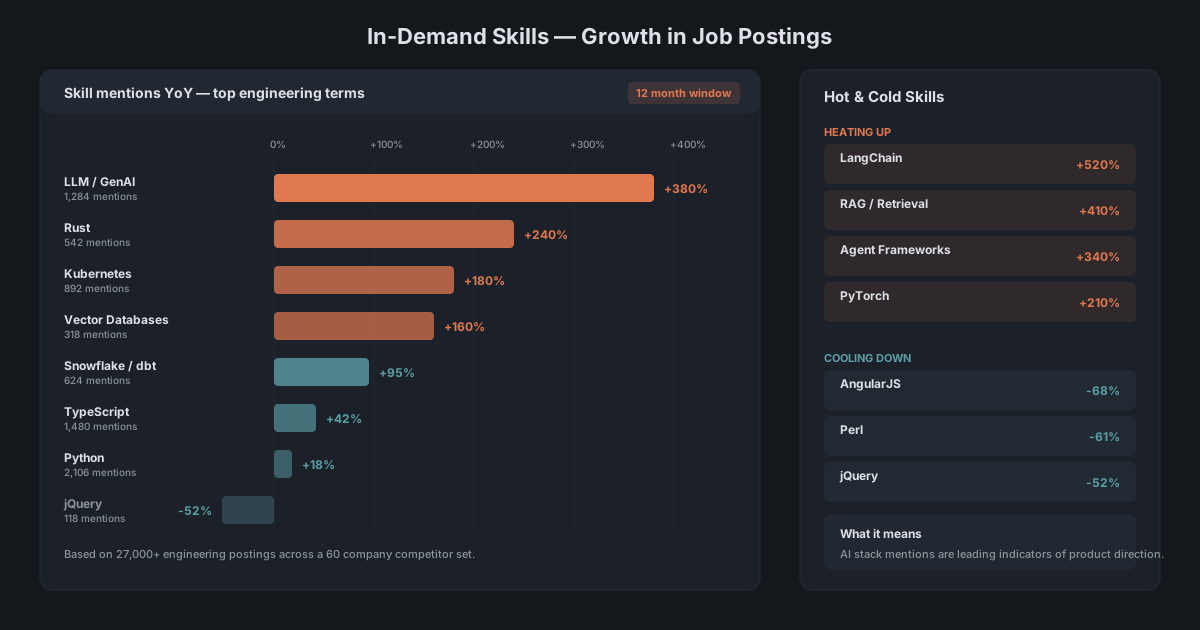
Job Postings Are the Most Honest Source of Tech Stack Truth
Job postings reveal tech stack reality more honestly than any other public source. Companies don't fabricate the skills they require in job descriptions. Marketing materials might say "we use modern cloud-native architecture." Job postings tell you exactly which cloud, which database, which CRM, which observability platform. The job description is operational truth.
For B2B sales teams, tech stack changes detected through job postings are one of the highest-leverage signals available. They surface buying windows for adjacent products, identify displacement opportunities, and reveal what competitors are adopting before any analyst report notices.
What Tech Stack Signals Job Postings Reveal
New Adoption
When a company that previously didn't mention a technology starts requiring it in postings, they're adopting. The pattern: a few months of "experience preferred" followed by "experience required" followed by multiple postings with the technology as a core requirement. This is the most actionable signal for vendors selling tools that integrate with the new technology.
Active Usage Confirmation
Job postings confirm that a technology is actually in use, not just listed in marketing. "5+ years of Snowflake experience required" is evidence that Snowflake is operationally important. "Familiarity with Snowflake helpful" is much weaker evidence.
Migration Patterns
Companies migrating between technologies often post for both during the transition. A company moving from Redshift to Snowflake might require both for 6-12 months. Detecting both technologies in active postings signals migration in progress. After the migration, only the new technology appears.
Internal Capability Building
When a company starts hiring for skills that suggest they're building internally instead of buying, they're moving away from a vendor. A company hiring search engineers might be moving away from a hosted search provider. A company hiring data engineering talent might be moving away from managed ETL.
Stack Modernization
Postings reveal modernization initiatives. When a company that was Java/MySQL/jQuery in 2022 starts requiring Go/PostgreSQL/React in 2026, they're in the middle of a stack modernization that creates buying opportunities for cloud, observability, and infrastructure vendors.
The Sales Intelligence Workflow
Step 1: Define Your Trigger Stack
List the technologies that, when adopted by a target account, indicate they're a buyer for your product. If you sell a Snowflake-adjacent tool, your trigger is Snowflake adoption. If you sell a CrowdStrike alternative, your trigger is CrowdStrike usage (which signals security maturity and budget). If you sell developer tools, your triggers are Kubernetes, Terraform, Docker, and similar.
Step 2: Monitor Target Account Job Postings
Collect job postings from your target account list. For each posting, extract required and preferred technologies. Track the technology mentions over time. The first posting that mentions your trigger stack at a new account is the alert.
Step 3: Validate the Signal
One posting doesn't always mean adoption. Look for: multiple postings mentioning the same technology, postings from different teams or departments, and postings for senior roles (which require deeper expertise and indicate operational use).
Step 4: Build the Outreach Playbook
The outreach should reference the specific technology context. "I noticed your team is hiring for Snowflake experience" is dramatically more effective than generic outreach. The specificity proves you've done your homework and connects your product to a current company priority.
Step 5: Track Outcomes
Measure the difference between tech-stack-triggered outreach and untriggered outreach. Reply rates, meeting rates, and pipeline conversion should all be higher for triggered outreach. If they're not, refine the trigger definition or the outreach template.
Tech Stack Signals That Drive Real Outcomes
Cloud Migration Signals
Companies migrating to cloud post for cloud architects, DevOps engineers, and platform engineers. The technology requirements (AWS, Azure, GCP, plus specific services like EKS, Lambda, Fargate, Cloud Run) reveal which cloud and which depth. For vendors selling cloud security, cloud cost management, observability, or cloud-native platforms, these signals identify accounts in the buying window.
Data Stack Modernization Signals
Job postings for data engineers requiring dbt, Snowflake, Fivetran, or Airflow signal a modern data stack build-out. Vendors selling reverse ETL, data observability, BI tools, data catalogs, or data quality solutions can use these signals to identify accounts that just adopted the underlying stack.
Security Stack Maturation
Job postings for security engineers requiring specific tools (CrowdStrike, SentinelOne, Wiz, Snyk, Datadog, Splunk) reveal which vendors a company is locked into. Vendors selling complementary security tools or alternatives can target accounts with specific security maturity profiles.
Sales and Marketing Tech Signals
Marketing operations and sales operations job postings reveal CRM, marketing automation, sales engagement, and analytics tools in use. New martech or sales tech adoption in postings often precedes or accompanies leadership transitions, creating compound signals.
AI/ML Stack Signals
Job postings for ML engineers reveal which model providers, vector databases, fine-tuning platforms, and inference services a company is using. As enterprise AI matures, these signals are becoming the most actionable for vendors selling AI infrastructure and tooling.
Common Mistakes With Tech Stack Signals
Mistake 1: Treating All Mentions Equally
"Familiarity with Snowflake helpful" is much weaker than "5+ years Snowflake required." Weight your signals by the strength of the requirement language. Required skills in senior roles produce higher-quality signals than nice-to-haves in entry-level postings.
Mistake 2: Single-Posting Triggers
One posting can be experimental. Multiple postings across teams indicate operational adoption. Wait for the second or third posting before treating the signal as actionable for outreach.
Mistake 3: Ignoring Disappearance Signals
When a technology disappears from postings, the company is phasing it out. This is a slower signal than adoption but valuable for vendors of replacement products. A target account that mentioned Marketo for years and stopped is a Marketo replacement opportunity.
Mistake 4: Generic Outreach Despite Specific Signal
The whole point of tech stack signals is enabling specific outreach. Detecting the signal and then sending generic email defeats the purpose. The outreach has to reference the technology and connect it to your product's value.
Building Tech Stack Intelligence Into Sales Workflow
Sales teams that operationalize tech stack signals integrate them into the prospecting workflow. The pattern:
- Target account list with monitored job postings
- Trigger definition by product line
- Automated alert when trigger fires at a target account
- SDR or AE assignment for the triggered account
- Specific outreach template referencing the technology
- Tracking of triggered vs untriggered outreach performance
- Quarterly refinement of triggers based on conversion data
This workflow turns tech stack intelligence from a curiosity into a measurable pipeline source. The teams running it produce 3-5x better conversion on triggered outreach compared to traditional cold prospecting.
Fieldwork's competitive intelligence reports include tech stack monitoring across your target account list, with alerts when key technologies appear or disappear in job postings. See pricing to start operationalizing tech stack signals in your sales motion.
Frequently Asked Questions
How do job postings reveal tech stack changes?
When a company starts requiring a specific technology in job descriptions for relevant roles, they're either already using it or actively adopting it. The pattern is reliable: required skills in job postings reflect current and near-future tech stack reality. Tracking these changes over time surfaces tech adoption months before competitors notice.
Which technologies show up most clearly in job posting analysis?
Cloud platforms (AWS, Azure, GCP), data warehouses (Snowflake, BigQuery, Databricks), CRMs (Salesforce, HubSpot), marketing automation (Marketo, HubSpot, Pardot), security tools (CrowdStrike, Palo Alto), and developer platforms (Kubernetes, Terraform, Datadog) all show up clearly. Niche or boutique tools are harder to detect because they appear in fewer postings.
How fast can I detect a tech stack change?
The fastest detection is within days of the company posting a new role with the new technology required. Most tech stack adoption requires hiring people who already know the technology, so the hiring posting precedes or matches the adoption timeline. Companies that adopt without hiring (using existing engineers) are harder to detect.
What sales motion does this enable?
Vendors selling adjacent or competing technologies can use tech stack signals to time outreach. If you sell a Snowflake-integrated tool, a target company adding Snowflake to job postings is in the buying window for Snowflake-adjacent products. If you sell a CrowdStrike alternative, a competitor's CrowdStrike dependence in postings tells you what they're locked into.
Can job postings reveal when companies are removing technology from their stack?
Yes, indirectly. When a technology stops appearing in postings for relevant roles, it usually means the company has phased it out or is migrating away. The signal is slower than additions because companies maintain legacy systems for years, but consistent year-over-year decline in mentions correlates with displacement.